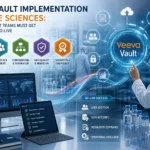
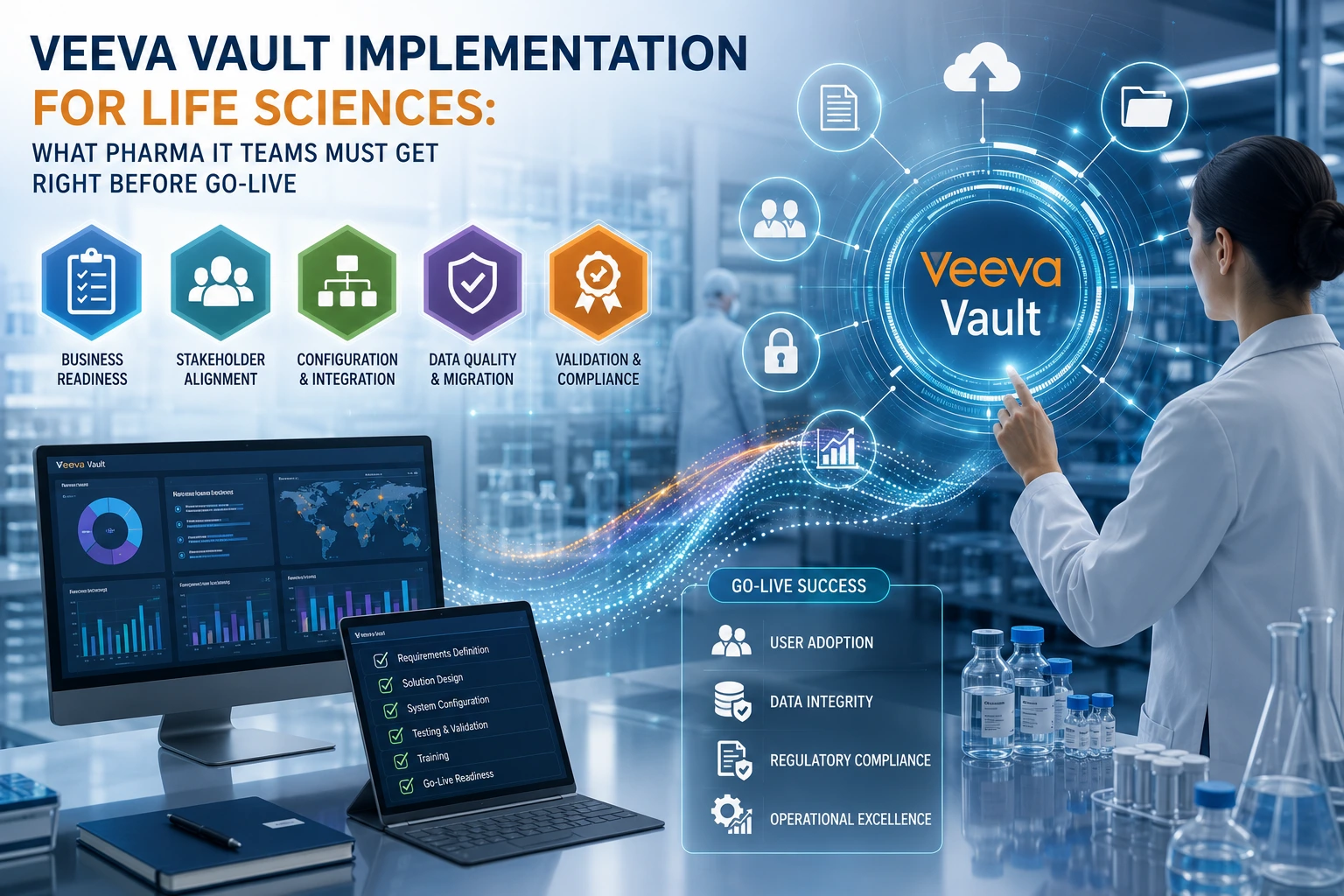
Veeva Vault implementation fails most often at three points: content migration without a metadata governance framework, 21 CFR Part 11 gaps in electronic signature configuration, and SAP integration scoped too late. All three are preventable when treated as first-phase design decisions rather than late-project activities.
Why Life Sciences Organizations Are Standardizing on Veeva Vault
The regulatory document management challenge in pharma and biotech has become structurally unsolvable with traditional approaches. FDA 21 CFR Part 11, EU Annex 11, and ICH guidelines require audit trails, electronic signature controls, and document lifecycle management that SharePoint, network file shares, and legacy EDMS platforms were not built to deliver. Retrofitting compliance onto a non-purpose-built system requires more effort, produces more audit risk, and costs more to maintain than implementing a purpose-built platform correctly.
Veeva Vault was designed for this regulatory environment from the ground up. Its audit trail captures every document action at the system level without additional configuration. Its electronic signature implementation meets 21 CFR Part 11 requirements by design. Its document lifecycle management reflects the GxP quality process rather than requiring it to be forced onto a generic workflow tool.
For life sciences and pharma organizations served by eGlobal Healthcare IT’s life sciences and pharma IT solutions team, Veeva Vault implementation is a high-stakes project where compliance is not negotiable and go-live errors cannot be quietly corrected — they create audit exposure that persists until re-validation is completed.
What Makes Veeva Vault Implementation Different from Standard Cloud Projects?
Computer System Validation Is Not Optional
Computer System Validation for any Vault used in GxP-regulated activities requires an Installation Qualification (IQ) confirming the system is installed as specified, an Operational Qualification (OQ) confirming the system operates as designed, and a Performance Qualification (PQ) confirming the system performs correctly in the intended use context. Each requires a documented protocol, executed testing with documented results, and a signed protocol completion report.
Organizations that treat CSV as a post-go-live documentation exercise produce validation reports that do not reflect how the system was actually configured and tested. This creates audit exposure that cannot be corrected retroactively without re-executing the validation protocols meaning a system that went live without proper CSV may need to be taken offline for re-validation if an FDA inspector requests validation evidence during an inspection.
Electronic Signature Configuration Must Match Your Authority Matrix
Vault’s electronic signature configuration — which events require a signature, which signature meaning statements are presented, how signature records are reported — must be explicitly designed to match the organization’s document approval authority matrix. The most common compliance gap is a signature configuration that satisfies the 21 CFR Part 11 technical definition but does not reflect which personnel are authorized to approve which document types. This gap is invisible until an FDA inspector reviews audit trail records and identifies signatures from unauthorized personnel.
What Are the Most Common Veeva Vault Implementation Failures?
Content Migration Without Document Classification Governance
Migrating content into Vault is not a file transfer. Every document requires assignment to the correct document type, lifecycle state, and classification within the Vault taxonomy. Documents migrated without correct classification land in wrong lifecycle states with incorrect access permissions and audit trail records that do not match the organization’s quality process.
The migration scope decision — which documents migrate into Vault, which are archived externally, which are retired — is a quality and compliance decision that must be made before migration begins. In-scope GxP documents must migrate with their complete approval history. This decision cannot be delegated to the IT implementation team.
User Role and Permission Design Creating Compliance Gaps
The implementation temptation is to assign broad permissions to avoid users being blocked from documents they need. The compliance consequence is that users can act on documents outside their authorized scope — creating audit trail records that do not align with the quality process. Role design must start from the existing authority matrix and translate it into Vault permission groups before configuration begins.
SAP Integration Scoped Too Late
Organizations running SAP ERP alongside Veeva Vault need integration for quality event management, regulatory submission tracking, and batch record workflows. This integration needs to be scoped and designed in the project’s discovery phase. Discovering the integration requirement during UAT means building and validating it against a compressed timeline before go-live — which is how integration errors reach production.
How Should Pharma IT Teams Structure a Veeva Vault Implementation?
Phase | Key Activities | Compliance Gate |
Discovery | Requirements, module selection, gap analysis, system impact assessment | Validation plan approval |
Design and configuration | Lifecycle design, role matrix, workflow build, taxonomy design | Design qualification (DQ) |
Testing | IQ, OQ, PQ protocol execution, defect resolution, sign-off | Validation protocol completion |
Migration | Document classification, metadata mapping, migration testing, validation | Migration validation report |
Go-live | User training, cutover, hypercare, validation closure | System validation closure |
What Does Post-Go-Live Vault Governance Look Like?
Veeva Vault in a regulated environment requires ongoing change control for every configuration modification. Adding a document type, modifying a lifecycle state, changing a permission group — each requires impact assessment against the validation baseline, testing in a non-production environment, and formal deployment to production through the change management process.
Organizations that manage Vault through informal IT requests consistently see their validation status degrade as undocumented configuration changes accumulate. A managed services arrangement that includes configuration change management and periodic revalidation keeps validation status current and reduces the risk of inspection findings related to system management.
Frequently Asked Questions
How long does a Veeva Vault implementation take for a mid-size pharma company?
Six to twelve months depending on which modules are in scope, content migration volume, and CSV documentation requirements. QualityDocs implementations typically run at the shorter end; multi-module implementations with complex migration scope run longer.
Is computer system validation required for every Veeva Vault implementation?
Yes for any Vault used in GxP-regulated activities. IQ, OQ, and PQ protocol documentation is a regulatory requirement. Post-go-live CSV cannot substitute for pre-go-live validation — if inspection evidence is requested, retroactive documentation is not acceptable.
Can Veeva Vault replace SharePoint for regulated content in life sciences?
For GxP-regulated documents, yes. SharePoint lacks the audit trail depth, electronic signature controls, and lifecycle management required for 21 CFR Part 11 compliance. Making SharePoint compliant requires more effort than implementing Vault correctly.
What is the difference between Vault QualityDocs and Vault PromoMats?
QualityDocs manages SOPs, batch records, and quality system documentation for GxP compliance. PromoMats manages promotional and medical affairs content through medical-legal-regulatory review workflows. Both run on the Vault platform but serve distinct regulatory functions.
Do we need a Veeva-certified implementation partner?
Working with consultants who have hands-on Vault configuration and CSV execution experience in regulated environments significantly reduces implementation risk. General-purpose IT consultants without life sciences domain expertise are not appropriate for GxP Vault implementations.
eGlobal Healthcare IT’s life sciences team delivers Veeva Vault implementations with built-in CSV documentation, compliance configuration, and SAP integration expertise. Contact us at info@eglobalhealthcareit.com to discuss your Vault project.